Milwaukee protesters urge de-escalation after U.S.-Israeli strikes on Iran widen regional tensions
Protests in downtown Milwaukee followed rapidly evolving events overseas
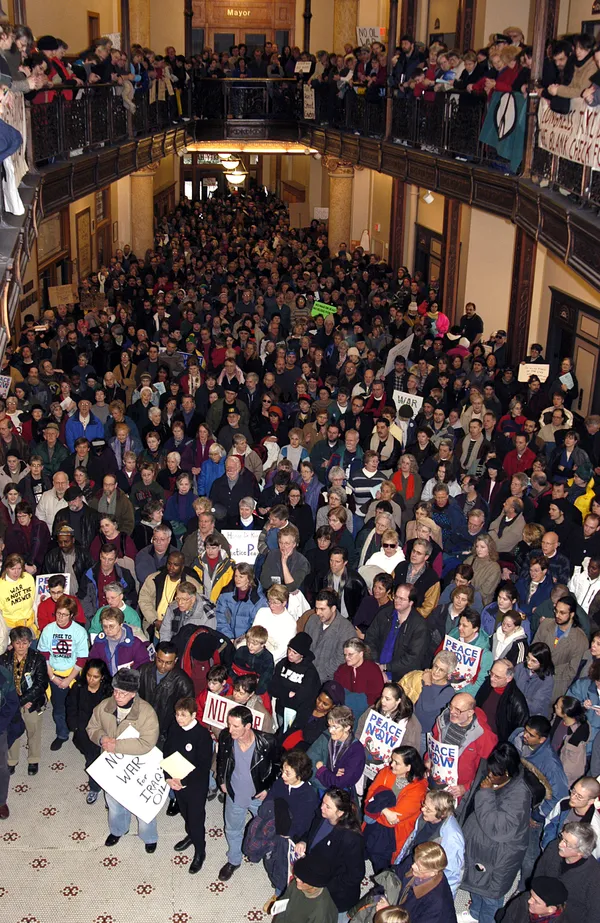
Demonstrators gathered in downtown Milwaukee on Saturday, Feb. 28, 2026, calling for de-escalation after U.S. and Israeli military strikes hit targets across Iran. Organizers described the rallies as emergency actions and framed their message around opposing a wider war and urging protection of civilians.
Two separate gatherings were held in central Milwaukee: one at Zeidler Union Square and another at Cathedral Square. Participants carried signs and chanted slogans focused on avoiding further escalation. Speakers and attendees expressed concern that continued military action could expand into a broader regional conflict.
Who organized the rallies and what participants said
The Milwaukee Anti-War Committee organized a protest at Zeidler Union Square. The Party for Socialism and Liberation also held an action at Cathedral Square. At both locations, protesters urged diplomatic steps rather than additional military action and emphasized preventing civilian casualties.
Some demonstrators described the strikes as unnecessary and questioned the stated rationale for the military operation. Others warned that retaliatory attacks and counterattacks could create a cycle of escalation that is difficult to contain.
- Location: Downtown Milwaukee, including Zeidler Union Square and Cathedral Square.
- Date: Saturday, Feb. 28, 2026.
- Central message: Calls for peace, restraint, and avoidance of expanded warfare.
What is known about the February 28 strikes and immediate fallout
The U.S.-Israeli action on Feb. 28 targeted multiple sites in Iran tied to military and strategic capabilities, and it came amid heightened tensions over Iran’s nuclear program and regional security disputes. The strikes triggered international alarm about wider instability, including the risk of retaliatory attacks affecting multiple countries in the region and disrupting travel and commerce.
Iran’s leadership reported significant losses among senior figures as a result of the operation, an outcome that raised questions about command continuity and the likelihood of further retaliation. Reports of civilian harm added urgency to calls—both internationally and at the Milwaukee protests—for restraint and renewed diplomatic engagement.
Protesters in Milwaukee emphasized avoiding additional loss of life and urged policymakers to pursue de-escalation.
Local demonstrations reflect a pattern of recurring mobilization
Milwaukee has seen repeated public demonstrations tied to Middle East conflicts over the past year, including earlier rallies in 2025 related to Israel-Iran hostilities and U.S. involvement. Saturday’s gatherings fit that pattern: rapid organizing following major developments overseas, with messages centered on limiting U.S. military engagement and prioritizing negotiated outcomes.
Organizers indicated that additional events could follow as the situation develops and as reactions to the Feb. 28 strikes continue nationally and internationally.
Public invited to review preliminary Red Arrow Park redesign alternatives at City Hall Rotunda open house

Wisconsin approves state historic marker for Milwaukee’s former This Is It! LGBTQ bar building
Milwaukee officials outline changes to Brady list process, raising questions about notice and oversight