Milwaukee County launches undercover deputy patrols and expanded fare compliance efforts on select bus routes
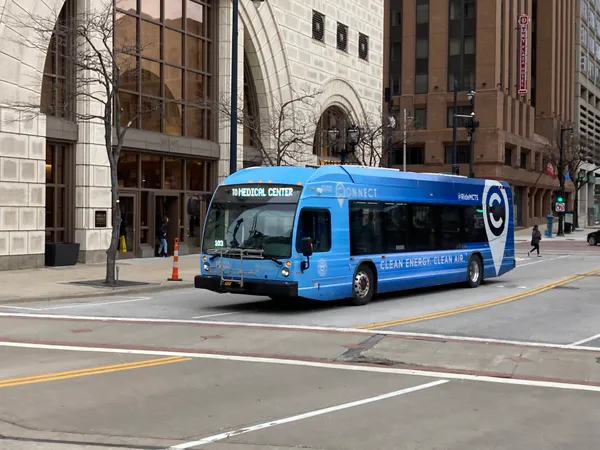
New law enforcement presence begins as part of county-funded 2026 transit safety pilots
Milwaukee County is beginning a new phase of transit security on Milwaukee County Transit System (MCTS) buses, deploying plainclothes sheriff’s deputies on select routes while expanding the system’s in-house fare compliance staffing. The initiatives are structured as pilot programs funded through the county’s adopted 2026 budget and are designed to address criminal activity, operator safety concerns and fare evasion.
The transit security pilot places undercover deputies on targeted routes, with deployments guided by data shared between MCTS safety staff and the Milwaukee County Sheriff’s Office. The stated aim is to improve response capability for significant safety and security incidents involving criminal activity, while adding a law enforcement presence that is less conspicuous than uniformed patrols.
Fare compliance program increases uniformed visibility at high-evasion locations
Running alongside the deputy patrol initiative, MCTS is launching a separate pilot focused on fare compliance beginning January 19, 2026. Under this program, MCTS will increase hours for its existing Public Safety Officer (PSO) program, placing uniformed personnel at high-evasion stops and on buses to deter fare evasion and strengthen day-to-day rider and operator security. MCTS has also indicated it is recruiting additional PSOs to support an expanded presence through 2026.
- Transit Security Pilot Program: plainclothes sheriff’s deputies on select routes, deployed using targeted intelligence.
- Bus Fare Compliance Pilot Program: increased uniformed PSO presence on buses and at stops with high fare-evasion activity.
How the pilots fit into wider safety measures on the bus system
The new enforcement steps add to existing security tools already used across the bus network. MCTS buses are equipped with onboard camera systems, including high-definition cameras with live-look capabilities, and newer buses feature passenger-facing CCTV display screens intended to reinforce awareness that activity is recorded.
The county’s approach combines targeted law enforcement, visible security staffing and technology-based monitoring—each intended to reduce incidents and improve the riding environment.
Timeline and oversight
The fare compliance pilot launches January 19, 2026. The sheriff’s transit security pilot is designed to run through 2026 or until the funding designated for the program is exhausted. Route selection and deployment details are expected to remain flexible, reflecting incident patterns, operational needs and the availability of personnel.
County officials have framed both pilots as time-limited efforts meant to test whether added enforcement and visibility can measurably improve safety conditions and reduce revenue losses associated with fare evasion. Any long-term continuation or expansion would require future funding decisions and operational evaluation based on results observed during 2026.