Milwaukee-Area Snow Contractors Ration Road Salt as Regional Supplies Tighten During Repeated Winter Storms
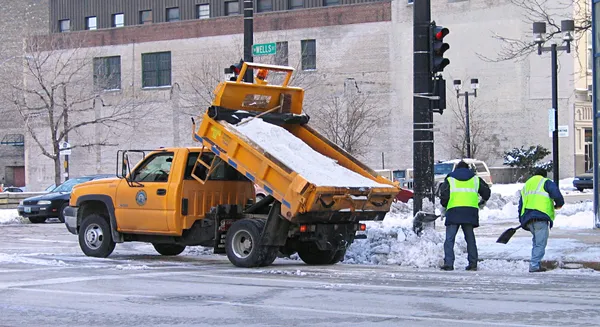
Salt shortages expand beyond public streets into private snow-and-ice operations
Snow-and-ice contractors serving the Milwaukee area are increasingly managing limited supplies of road salt as inventories tighten across parts of Wisconsin during an active winter season. The shift is most visible in operational changes: prioritizing high-traffic areas, reducing application rates, and substituting materials when temperatures or supply constraints limit traditional salting.
Reports from communities in northeast Wisconsin in mid-January 2026 described low salt availability and the need to ration remaining stock. In those locations, remaining material was reserved for major routes and heavily traveled areas, while some roads and sidewalks were left untreated with salt during snowfall events.
What rationing looks like on the ground
Municipal practices in Milwaukee have illustrated how conservation can be implemented during constrained supply periods. Past conservation approaches documented in city operations included concentrating treatments on main streets and using reduced application rates, with limited salting at intersections and busier locations while relying more heavily on plowing for longer roadway stretches.
For private contractors, similar strategies translate into service triage and communication changes with customers: commercial sites with higher liability exposure and larger pedestrian volumes are treated first; lower-priority lots and secondary walkways may receive less frequent or lighter applications, especially during repeated small events that still require de-icing.
- Prioritizing arterial routes, entrances, loading areas and high-foot-traffic sidewalks
- Applying salt more precisely and at lower rates to extend supply
- Using abrasives such as sand for traction when conditions warrant
- Switching products in colder conditions where standard salt becomes less effective
Logistics and policy factors affecting resupply
Winter maintenance supply is shaped not only by total demand but also by transportation constraints. Wisconsin’s frozen road law is designed to increase allowable weights for trucks hauling salt and sand when highways are sufficiently frozen, which can improve delivery efficiency and reduce the number of trips required to move the same tonnage. Wisconsin’s frozen road declaration for the 2025–26 season began in portions of the state in December 2025, with additional zones activated as conditions warranted.
When frozen road conditions are in effect, heavier loads of salt and sand can be moved on eligible state highways without special permits for properly licensed vehicles, supporting winter maintenance logistics.
Safety, effectiveness and environmental limits
Public agencies in Milwaukee continue to emphasize that salt is not universally effective. Guidance used locally notes that standard salt performance drops substantially when pavement temperatures fall below about 15 degrees Fahrenheit, at which point abrasives or other de-icers may be more appropriate.
Environmental impacts also factor into long-term planning. Wisconsin’s Winter Salt Awareness Week is scheduled for Jan. 26–30, 2026, reflecting ongoing statewide efforts to reduce excess salt use and limit chloride buildup in lakes, streams and groundwater.
For residents and businesses, the practical takeaway is that road and sidewalk conditions may vary more widely this season. With constrained supply and repeated events, both municipalities and contractors are increasingly making targeted decisions about where and when limited de-icing materials are applied.