Incentives under review as Milwaukee Tool advances $206 million Wisconsin expansion and 1,000-job commitment through 2027
Expansion plan spans multiple sites and ties public support to hiring and capital spending targets
Milwaukee Tool is moving forward with a multi-year expansion plan in Wisconsin valued at $206 million, a project tied to performance-based incentives and a commitment to add 1,000 jobs by 2027. The initiative covers activity across several southeastern Wisconsin locations, including downtown Milwaukee and facilities in the suburbs, reflecting the company’s continued growth strategy in engineering, technical and other high-skill roles.
The state incentive package connected to the $206 million plan totals up to $22.5 million in Enterprise Zone tax credits. These credits are structured so the value ultimately realized depends on Milwaukee Tool meeting agreed benchmarks for job creation and capital investment. The state’s Enterprise Zone partnership with the company dates to 2016, and cumulative authorized credits connected to the relationship have been reported in the tens of millions of dollars over multiple project phases.
What the $206 million framework includes
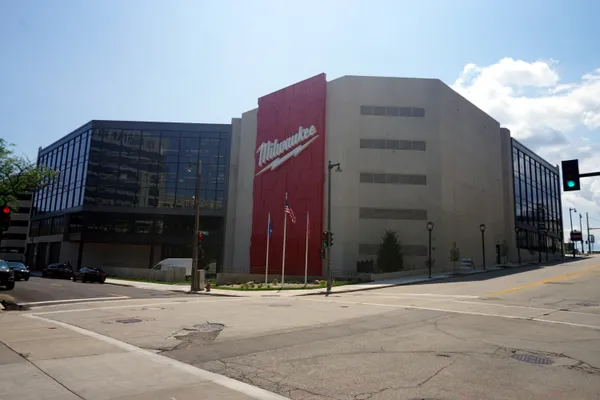
The expansion is not limited to a single construction site. It is tied to a broader footprint that includes downtown Milwaukee office investment and continued buildout in communities where Milwaukee Tool already operates. Publicly reported project descriptions have included renovation and occupation of major downtown office space as well as ongoing work tied to Menomonee Falls and Brookfield operations.
Capital investment target: $206 million through 2027, spread across Wisconsin facilities.
Jobs target: 1,000 additional positions associated with the expansion commitment.
State support mechanism: up to $22.5 million in Enterprise Zone tax credits, earned only if targets are met.
How local and state incentives shape the economics
Milwaukee Tool’s growth in the region has also intersected with city-level economic development tools. In downtown Milwaukee, prior agreements have tied financial assistance to specific employment thresholds, with job-location requirements that extend into the later 2020s. Such structures are designed to align public participation with measurable outcomes, including the number of jobs physically located within the city and long-term occupancy commitments.
Both state Enterprise Zone credits and city development assistance are commonly structured as performance-based programs, limiting public exposure if employment and investment goals are not achieved.
Recent related developments in Menomonee Falls
The company’s Wisconsin expansion activity has continued beyond the original $206 million framework. In September 2025, Milwaukee Tool announced a separate $42 million investment tied to a Menomonee Falls facility and an estimated 300 additional jobs, supported by up to $4.5 million in performance-based Enterprise Zone credits. In February 2026, municipal planning activity in Menomonee Falls also reflected additional site planning steps connected to Milwaukee Tool’s local property footprint, while the company indicated that details on timing and scope were still under consideration.
The combined set of initiatives underscores a sustained buildout strategy across southeastern Wisconsin, with incentive structures that require verified job creation and capital investment before public benefits are fully realized.